

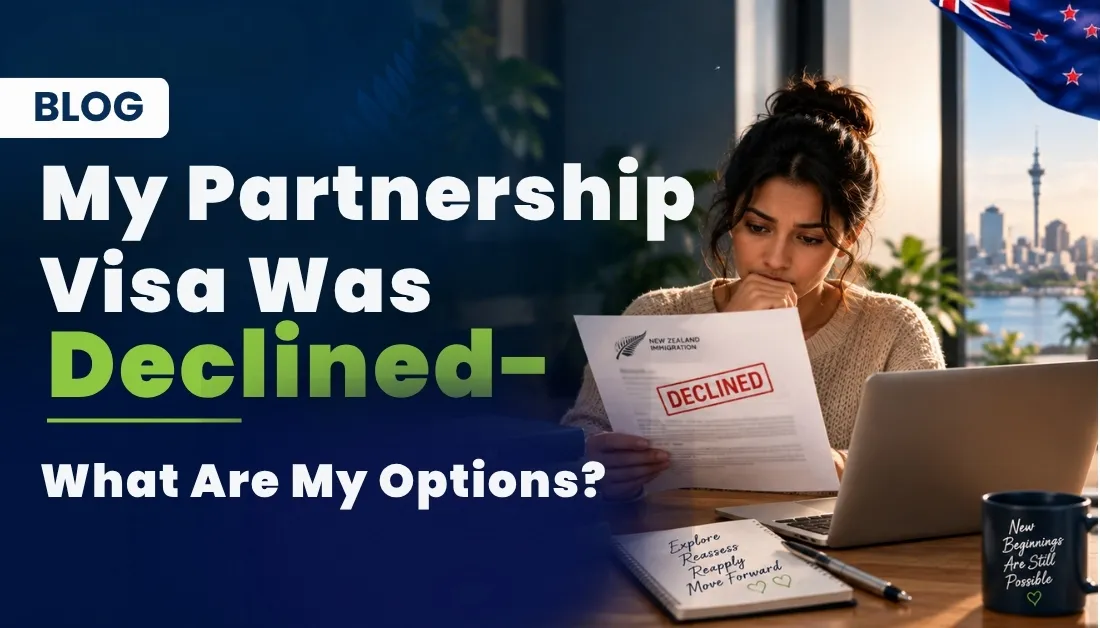
My Partnership Visa Was Declined — What Are My Options?
Receiving a partnership visa decline is distressing. If you and your partner have built a life together and your application has been refused, the immediate priority is to understand what options are available and act within the applicable timeframes. Delays at this stage can close off avenues that were initially open to you.
There is no single right answer for every declined application. The appropriate response depends on why the application was declined, what visa you currently hold, whether you are onshore or offshore, and what evidence or changed circumstances could be brought to bear. What follows is an overview of the main options available under New Zealand immigration law.
Option 1: Reconsideration Request
A reconsideration request asks INZ to take a fresh look at its decision. It is available in specific circumstances — primarily where a temporary visa (such as a partnership work visa or visitor visa) has been declined and you are currently in New Zealand holding a valid visa.
A reconsideration is not an appeal. You are not presenting your case to an independent body — you are asking INZ to reassess its own decision, usually on the basis that the original assessment was incorrect, that new or additional evidence is available, or that a relevant factor was not properly considered.
Reconsideration requests must be well-structured and substantive. Simply restating what was in the original application is unlikely to succeed. The request should identify specifically where and why the original decision is said to be wrong, and provide evidence that directly addresses those reasons.
Option 2: Appeal to the Immigration and Protection Tribunal (IPT)
The Immigration and Protection Tribunal (IPT) is an independent body that hears appeals against INZ decisions. For partnership resident visa declines, an appeal must be filed within 42 days of the date of the decline decision. This timeframe is strict — missing it typically forecloses the appeal pathway entirely.
The IPT can hear appeals on the merits of the case, meaning it can substitute its own judgment for INZ’s if it determines the evidence supports a different outcome. It can also hear appeals on humanitarian grounds where there are exceptional circumstances that would make it unjust or unduly harsh to enforce the immigration decision.
IPT proceedings are more formal than a reconsideration request. They involve filing written submissions, and in some cases, hearings. The Tribunal may seek additional information from both the applicant and INZ. The process can take a significant period of time to resolve.
The 42-day window begins from the date of INZ’s decision — not from the date you receive the letter. Act immediately on receiving a decline notice.
Option 3: Fresh Application
A fresh application is appropriate where the grounds for the original decline can be genuinely addressed — for example, where the application was lacking evidence that can now be provided, where the couple has since met the cohabitation threshold they previously lacked, or where there has been a material change in circumstances.
A fresh application should not simply repeat the original. It must substantively address the reasons for the previous decline and present a stronger evidential case. INZ’s decision letter will state the reasons for the decline. Those reasons are the roadmap for a fresh application.
There is no mandatory stand-down period before lodging a fresh partnership visa application in most circumstances, but you should take advice on your current status and whether any visa conditions apply before proceeding.
Option 4: Section 61 Request
Section 61 of the Immigration Act 2009 gives INZ a broad discretionary power to grant a visa to someone who is unlawfully in New Zealand. This option applies where a person has no current valid visa, is not eligible for a standard application, and is not entitled to use another recourse mechanism.
A Section 61 request is a last resort, not a first option. INZ is not obligated to grant a Section 61 request and does not have to give reasons for declining one. However, in cases involving genuine hardship, strong humanitarian factors, or exceptional circumstances, a well-prepared Section 61 request can result in a positive outcome.
Choosing the Right Option
The options above are not mutually exclusive in all circumstances, but choosing the wrong one — or pursuing one at the expense of a more appropriate avenue — can waste time and money and may not preserve your position if your visa status deteriorates.
The factors that determine which option is right include: the type of visa that was declined (temporary or residence), your current immigration status (lawful or unlawful), the specific reasons given in the decline, the strength of any new evidence available, and the time elapsed since the decision.
Act Immediately
The most important thing to do following a partnership visa decline is to seek professional advice without delay. Timeframes in this area are short — particularly the 42-day IPT appeal window — and options that are available today may not be available next week. An experienced Licensed Immigration Adviser can assess your situation, advise you on which options are available, and help you build the strongest possible response.
This article is provided for general information purposes only and does not constitute immigration advice under the Immigration Advisers Licensing Act 2007. Immigration policies are subject to change. For advice specific to your circumstances, contact a Licensed Immigration Adviser.


Author Details

Vandana Rai
(LIA 201400900)
Director
Vandana is herself a migrant and has a rare set of skill match, which could be considered ideal for a Licensed Immigration Adviser. She was a school counsellor from 1996 to 2006, a role in which she was a natural fit due to her nurturing and caring personality. Her earnest journey as a fully Licensed Immigration Adviser for New Zealand began in 2014, and she considers herself blessed to have the background and the skills that allow her, as an Immigration adviser, to effortlessly visualise herself in her client’s situation, understand their needs and problems, and use her knowledge, experience, and expertise to help find a solution for it.
She is currently on the Board of New Zealand Association of Migration and Investment (NZAMI) and was part of the Immigration Advisers Authority(IAA) referral group for 2016.


 Home
 Services

 Contact
 About